November 25, 2026 – Shanghai, China
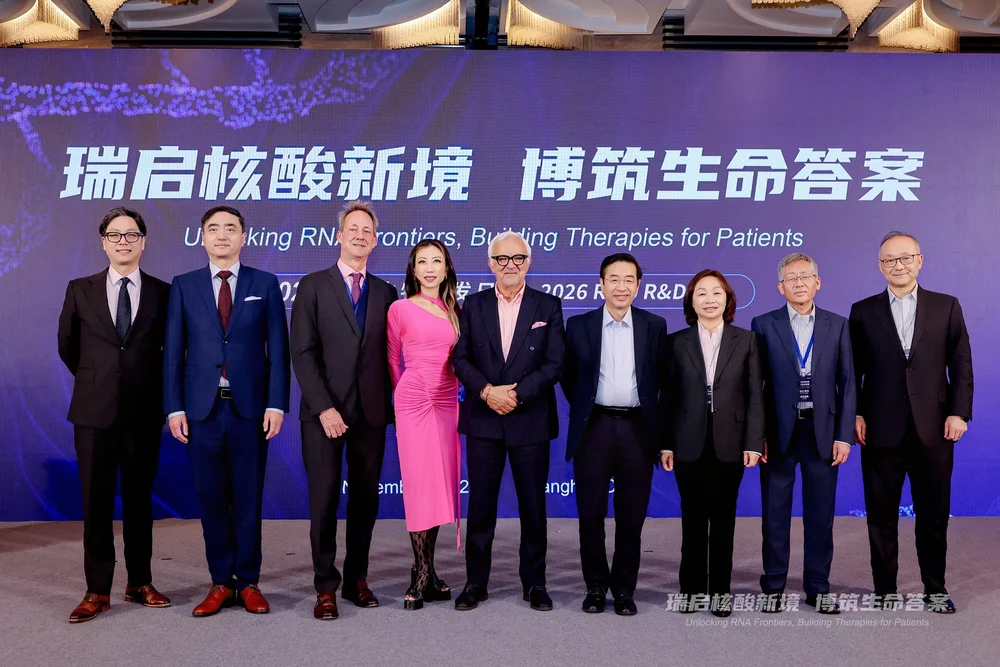
Ribo(06938.HK) successfully hosted its inaugural R&D Day in Shanghai on November 24. Together with internationally renowned experts in cardiovascular and metabolic medicine, Ribo’s management team presented its strategic positioning and clinical progress across major cardiovascular and metabolic diseases, highlighted recent advances in extrahepatic delivery to myocardium, skeletal muscle, kidney and CNS, and outlined its vision for the next generation of small interfering RNA (siRNA) therapeutics.

Advancing Global Core Cardiovascular and Metabolic Portfolio
Ribo’s strategy is anchored in major cardiovascular and metabolic diseases, where its two lead programs – vortosiran, a world’s first FXI-targeting siRNA; RBD5044, the world’s second ApoC3-targeting siRNA to enter clinical development – address large patient populations with substantial unmet need, aiming for exploring its maximum potential for residual lipid risk in high risk CV patients. Vortosiran is being developed for the anticoagulation and thrombosis market (estimated at approximately US$60 billion), while RBD5044 targets hypertriglyceridemia (HTG), a condition with an estimated global prevalence of 28.8%.
At the R&D Day, invited expert Prof. Carolyn S. P. Lam, Senior Consultant Cardiologist at the National Heart Centre Singapore and Professor at Duke-NUS Medical School, noted that thrombosis and dyslipidemia are major drivers of the global cardiovascular disease burden. In clinical practice, bleeding risks and the fear of bleeding still prevent some patients from receiving adequate anticoagulation therapy. Clinical studies have demonstrated the antithrombotic potential of targeting the FXI pathway, a strategy that holds the promise of inhibiting pathological thrombosis while preserving physiological hemostasis. Building on this, long-acting siRNA targeting FXI can sustainably suppress hepatic FXI synthesis, potentially offering a new therapeutic option with less frequent dosing for patients requiring long-term thromboprophylaxis.
Ribo presented the first comprehensive overview of its ORBIT-XI (Optimizing RNA-Based Inhibition of Thrombosis) program. Conducted in Europe, ORBIT-XI comprises four Phase II/IIb clinical studies evaluating two FXI-targeting siRNA candidates. The ORBIT-XI program is designed to develop indication-specific clinical strategies and identify optimal dosing regimens, laying a strong foundation for advancing FXI siRNA portfolio into global Phase III development.
For the key lipid-lowering product RBD5044, Ribo updated the progress of its ongoing Phase II trials for hypertriglyceridemia across Europe and China. Ribo also presented published literature and clinical research findings demonstrating a consistent association between ApoC3 reduction and cardiovascular benefit, reinforcing that the potential benefits of ApoC3 silencing may extend beyond triglyceride (TG) lowering. Inhibition of ApoC3, beyond treating dyslipidemia, may therefore also modulate underlying metabolic and inflammatory pathophysiological processes involved in the development and progression of cardiovascular disease. These findings may help inform the design of future clinical studies.
Additionally, Ribo is advancing its differentiated dual-targeting strategy in lipid management through SR122. By simultaneously targeting ApoC3 and PCSK9, two clinically validated pathways that play complementary roles in lipid metabolism, SR122 has the potential to offer a differentiated, next-generation approach to lipid management. Preclinical data suggest the candidate has best-in-class potential. This program further laid a solid foundation for Ribo to systematically expand its strategic footprint in cardiovascular residual risk management.
Breaking New Ground in Extrahepatic siRNA Delivery
Extrahepatic delivery represents a critical strategic frontier in the next phase of siRNA drug development and a key enabler of RNAi therapeutics for major diseases involving multiple organs. Ribo is one of the earliest Chinese siRNA companies to develop extrahepatic delivery technologies, and has progressively built a portfolio of different tissue-oriented siRNA delivery platforms including RiboPepSTAR™, RiboColorSTAR™, RiboOncoSTAR™ and RiboCygnus™. To date, Ribo has filed more than 70 patent applications related to extrahepatic delivery. Building on robust platform capabilities, Ribo has established a broad early-stage pipeline targeting diseases involving myocardium, skeletal muscle, adipose and metabolism, kidney and CNS. These programs serve as a vital strategic reserve for Ribo to explore the next-generation therapeutic frontiers in siRNA therapy.
• Myocardium: ~95% mRNA Knockdown in NHPs, Single Dose
Previously disclosed data from Ribo demonstrated approximately 90% maximal target gene knockdown in mice following a single subcutaneous administration. At R&D Day, Ribo presented non-human primate (NHP) data for the first time, showing an average reduction of approximately 95% in target mRNA expression in ventricular myocardial tissue, with favorable tissue selectivity. Efficient delivery has been achieved across species, from rodents to large animal models, supporting the clinical translation of this delivery platform. These findings will provide robust technical support for RNAi-based approaches to cardiovascular conditions such as cardiomyopathies, heart failure and cardiac arrhythmias.
• Skeletal Muscle: High Target mRNA Knockdown at a Low Dose
First unveiled at this R&D Day, data from mice demonstrated Ribo’s leading delivery technology enables potent, target-specific in-vivo gene silencing in skeletal muscle, achieving a 90% reduction in target mRNA expression at a dose as low as 0.5 mg/kg. This approach may offer new therapeutic opportunities for fat reduction, muscle preservation or enhancement, as well as other muscle-related disorders.
• Kidney: Poised to Enter Clinical Stage
Studies in cynomolgus monkeys have demonstrated effective target gene knockdown accompanied by improvements in relevant pharmacodynamic biomarkers, supporting the potential of this approach to address unmet needs in chronic kidney disease. Ribo’s kidney delivery platform has supported kidney-targeted drug candidates in advancing to the IND-enabling stage, with expectation to enter the clinical phase shortly.
• CNS: The First Single-Molecule Dual-Targeting Approach for Complex Biological Mechanisms
For CNS disorders, Ribo has first presented its globally proprietary next-generation RNAi platform RiboCygnus™. Through a novel molecular design, the platform enables simultaneous silencing of two targets, with deep penetration into the dorsal root ganglia and spinal cord as well as deep brain tissues. Preclinical studies have demonstrated greater pharmacological activity than that achieved through separate administration of the two siRNA agents. The technology may offer a new approach to neurological diseases with complex underlying mechanisms. Its deep and durable gene-silencing profile is also well suited to intrathecal administration. Pharmacological activity and safety have been extensively evaluated across multiple targets in in-vitro and in-vivo models (including NHP). The project in pain indication based on RiboCygnus™ is expected to be the first dual targeting CNS siRNA therapeutic in the world.
From Single-Organ Pipeline Innovation to Multi-Organ Synergistic Management
At this R&D Day, invited expert Prof. Faiez Zannad, Emeritus Professor of Therapeutics at Université de Lorraine and Inserm, Nancy France, and French National Institute of Health and Medical Research (INSERM), pointed out that for a long time, heart failure, chronic kidney disease, diabetes, and obesity have often been managed separately by different specialties. However, in clinical practice, these diseases frequently coexist in the same patient and share multiple risk factors and pathophysiological mechanisms. Integrating Cardiovascular, Kidney, Liver, and Metabolic (CKLM) diseases into a holistic management approach can help more comprehensively address patients’ multimorbidity burden, and also provides a direction for developing therapeutic strategies that deliver multi-organ benefits.
By identifying common underlying mechanisms, Ribo is bringing the heart, kidney, liver and adipose tissue into a unified disease management framework. Supported by continued innovation in its underlying delivery technologies, Ribo is progressively building an siRNA R&D system with the potential to expand across multiple targets, tissues and therapeutic indications. Looking ahead, Ribo will be guided by its strategic vision of integrated CKLM disease management. With global clinical development as the pathway to execution and extrahepatic delivery technology as the engine of innovation, Ribo will enable RNAi therapeutics to extend beyond the liver—the tissue where the modality has already established a strong clinical foundation—into a broader range of tissues and disease areas.
Dr. Li-Ming Gan, Co-CEO and Global R&D President of Ribo, commented: “Within this strategic framework, Ribo will on one hand continue to further consolidate the competitive position already established in the field of liver disease, particularly metabolic dysfunction-associated steatohepatitis (MASH) through platform-level strategic cooperation; on the other hand, to accelerate the advancement of core clinical programs vortosiran and RBD5044 toward global Phase III development. Meanwhile, Ribo will explore opportunities to address unmet clinical needs across the CKLM disease ecosystem, including kidney diseases, liver diseases and metabolic conditions such as obesity. These efforts are expected to further broaden the tissue coverage and therapeutic applications of RNAi.”
Dr. Zicai Liang, Chairman and CEO of Ribo, commented: “As a pioneer in siRNA, Ribo has witnessed the industry evolve from its early beginnings to the current rapid expansion. As the industry is enters a new phase of explosive growth, Ribo has made remarkable progress in advancing its clinical assets, deepening its footprint across the CKLM disease landscape, and continuously strengthening its extrahepatic delivery technologies. Together, these efforts have laid the foundation for more systematic clinical development capabilities across multiple indications. Looking ahead, we will continue to leverage robust clinical data and international collaborations to drive further innovation and evolution of our technology platforms, making steady progress toward the goal of becoming a global leader in siRNA field.”