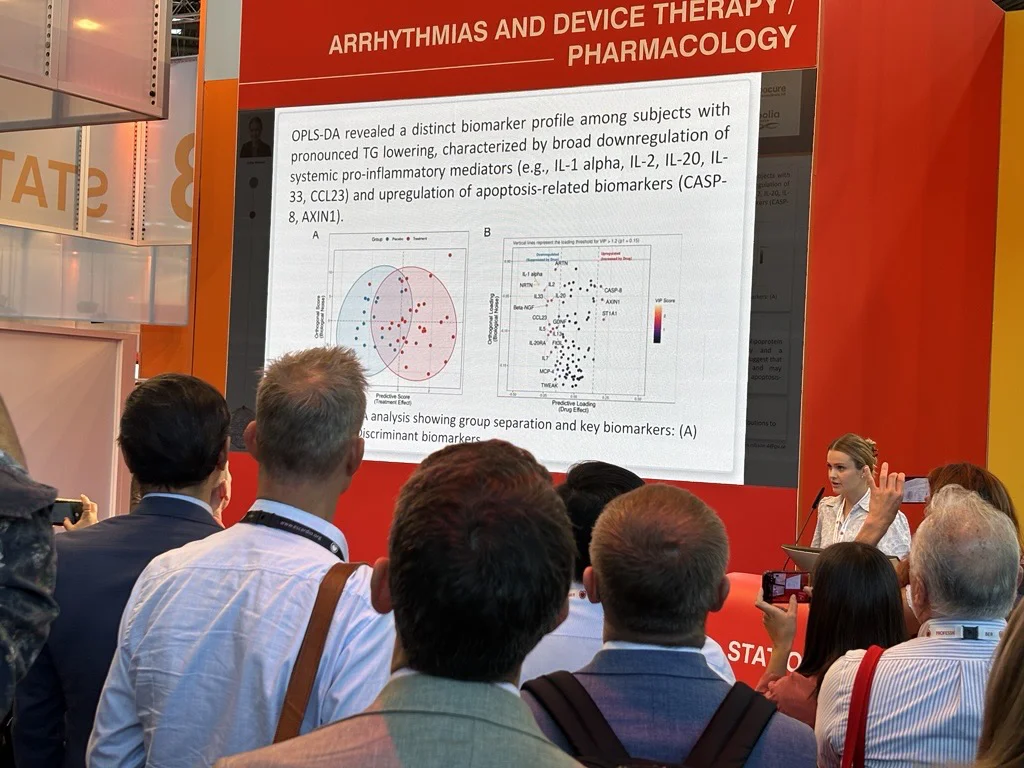

New research highlights a close connection between elevated triglycerides, inflammation, and cardiovascular health. Our clinical data show that patients with higher fasting triglyceride levels have a more inflammatory and metabolically unhealthy profile, along with poorer cardiovascular function. Meanwhile, our Phase 1 results for RBD5044, an APOC3-targeting siRNA, demonstrate that substantial and long-lasting triglyceride reduction is accompanied by favorable changes in lipid-related proteins and inflammatory biomarkers.
Together, these findings suggest that APOC3 silencing may do more than lower triglycerides. By targeting a key driver of elevated blood fats, it may also help address the underlying metabolic and inflammatory processes that contribute to cardiovascular disease.
RBD5044 is currently being evaluated in global Phase 3-enabling Phase 2 clinical trials.
The data was presented in its full context as posters at ESC August 28-31, 2026:
“Apolipoprotein and inflammatory biomarker changes following marked triglyceride reduction with the GalNAc-conjugated APOC3 siRNA RBD5044”
Link
“Elevated fasting triglyceride levels are associated with adverse molecular profiles and impaired functional imaging measures in patients with suspected myocardial ischemia”